You Won’t Believe What Sihanoukville’s Streets Are Hiding
I didn’t go to Sihanoukville for the beaches—everyone does. I went for the food, and wow, was I blown away. Between crumbling colonial buildings and neon-lit alleys, I found sizzling woks, family-run stalls, and flavors I never expected. This isn’t just a resort town—it’s a living cityscape where every corner serves a story. If you think you know Cambodian food, wait till you taste it here, where tradition meets street hustle in the most delicious way.
Arrival: First Impressions of a City in Motion
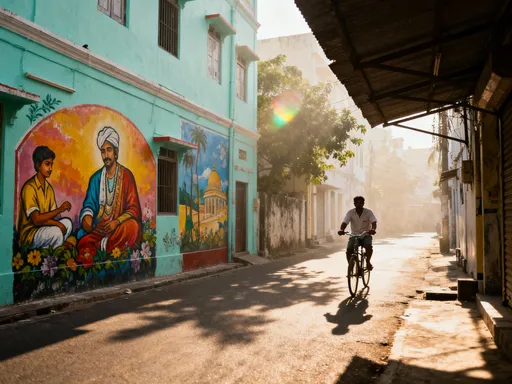
Stepping off the bus into Sihanoukville’s midday heat is like entering a living pulse. The air hums with the constant buzz of motorbikes weaving through traffic, their engines cutting through a symphony of street vendors calling out prices, clattering woks, and the occasional bark of a dog resting in a shaded doorway. Unlike the polished resorts dotting the coastline, the heart of the city reveals a different rhythm—one that doesn’t cater to postcard perfection but thrives on authenticity and resilience. Colonial-era buildings with peeling paint stand beside modern concrete shops lit by flickering neon, creating a skyline that tells decades of stories in cracked plaster and rusted iron railings.
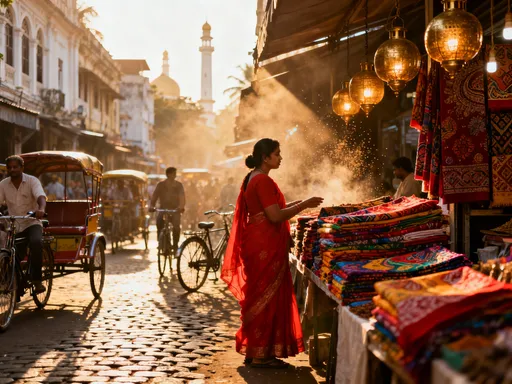
Visitors expecting quiet beaches and tranquil sunsets might be startled by the energy of the streets. Sidewalks double as market lanes, where baskets of ripe mangoes balance beside pyramids of chili peppers and bundles of lemongrass. Women in wide-brimmed hats fan their grilled fish over open charcoal pits, sending curls of fragrant smoke into the humid air. The scent of fish sauce mingles with sweet coconut and the sharp tang of fermented vegetables—a sensory map that guides the curious traveler deeper into the city’s culinary soul. This is not a place staged for cameras; it is lived-in, imperfect, and vibrantly real.
And that rawness is precisely what makes Sihanoukville unforgettable. There’s a beauty in its chaos, a kind of urban poetry written in exhaust fumes and sizzling oil. The city doesn’t hide its struggles—potholed roads, tangled power lines, the occasional pile of uncollected trash—but it also doesn’t apologize for them. Instead, it transforms limitations into opportunity. Where infrastructure falters, ingenuity rises. A broken-down storefront becomes a makeshift kitchen. A cracked pavement hosts a nightly gathering of food carts. This adaptability isn’t just survival; it’s the foundation of a culinary culture that values flavor over formality, accessibility over aesthetics.
For the traveler willing to look beyond the beachfront hotels, this urban texture is the gateway to something deeper. It sets the stage for discovery—not through curated experiences, but through chance encounters and unexpected meals. The moment you accept the city on its own terms, you begin to see the hidden patterns: the regulars who nod to the same noodle vendor every morning, the children who dart between tables delivering tea, the elderly couple sharing a plate of grilled bananas at dusk. These are the quiet rhythms of daily life, and they pulse strongest where the food is cooked fresh, served fast, and eaten with hands.
The Soul of the Streets: Where Food and Cityscape Collide
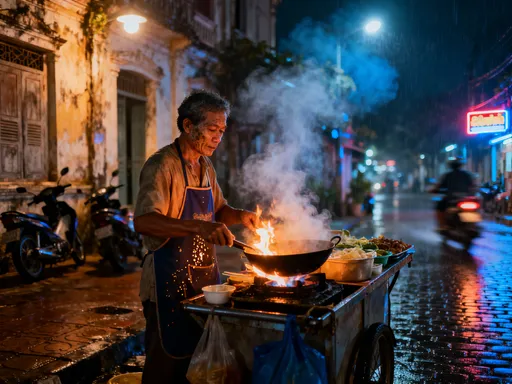
In Sihanoukville, street food isn’t an attraction—it’s infrastructure. It’s not something you seek out at a designated market; it’s embedded in the very structure of the city, as essential as water or electricity. Beneath weathered balconies where laundry flaps in the breeze, women stir bubbling pots of fish soup. Along alleyways strung with electrical wires, men grill skewers of pork belly over glowing coals. At intersections ruled by informal traffic patterns, mobile carts appear like clockwork, unfolding from bicycles or motorbikes into full-service kitchens in minutes. This is food that doesn’t wait for you—it’s already happening, part of the city’s daily metabolism.
One of the most striking features is how food integrates with the city’s architecture, even in decay. In the older districts, colonial buildings with crumbling facades house ground-floor kitchens where generations have fried spring rolls and steamed dumplings. The peeling paint and cracked tiles aren’t signs of neglect—they’re markers of endurance. These spaces have survived monsoons, shifting economies, and waves of change, yet the food remains. A single gas burner, a few metal bowls, and a wok older than the owner are all that’s needed to serve meals that taste like memory.
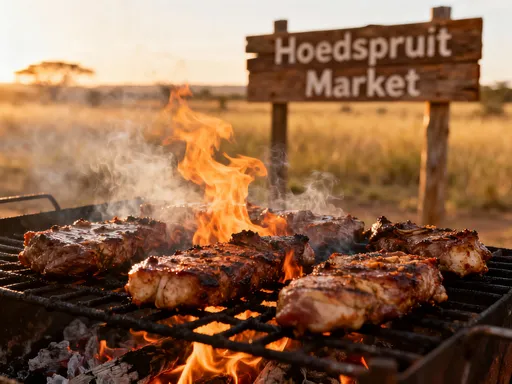
Different parts of the city awaken at different hours, each with its own culinary rhythm. By dawn, the fish market near the port stirs to life. Fishermen haul in their catch—silvery mackerel, striped snapper, squat squid still twitching—while buyers haggle over prices in rapid Khmer. By mid-morning, noodle stalls dot the sidewalks, serving bowls of num banh chok to workers on break. The thin rice noodles come topped with a green fish curry sauce, shredded banana blossom, and a tangle of herbs, all for less than two dollars. As the sun dips, a new wave of vendors emerges—BBQ grills light up, skewers sizzle, and the scent of charred meat drifts through the evening air.
These scenes are not performances for tourists. They are real moments of sustenance and community. A group of construction workers shares a platter of grilled chicken and rice under a plastic tarp. A grandmother feeds her granddaughter spoonfuls of warm porridge from a thermos. A teenager hands a cold coconut to his friend after a long shift. Every transaction is simple, every gesture familiar. There’s no menu, no branding—just food, served with care, in the middle of life as it unfolds. This integration of food and urban life creates an environment where flavor isn’t just tasted; it’s felt, heard, and lived.
Breakfast Like a Local: The Hidden Rhythm of Morning Flavors
If you want to understand a city, wake up with it. In Sihanoukville, the true character of daily life reveals itself in the early hours, when the streets are still damp from the night’s rain and the first light filters through palm trees. By 6 a.m., the sidewalk kitchens are already active. Steam rises from metal pots, and the rhythmic thud of pestles pounding spices echoes from open doorways. This is when the city eats its most humble, most honest meals—simple dishes made with care, eaten quickly before the day’s work begins.
One of the most beloved breakfasts is num banh chok, a dish so common it’s almost invisible to locals but deeply revealing to visitors. At a small stall covered by a faded blue tarp, a woman in a floral apron ladles a fragrant green fish sauce over a nest of rice noodles. She adds a handful of crunchy bean sprouts, shredded cucumber, and a pinch of mint. The sauce—made from freshwater fish, kaffir lime, turmeric, and lemongrass—has simmered since before sunrise. It’s tangy, herbal, and just spicy enough to wake the senses. For less than a dollar, you get a bowl that tastes like the essence of Cambodia.
Nearby, another vendor fries spring rolls in a dented wok. The wrappers puff and crisp in hot oil, releasing a scent of garlic and pork that draws in passing motorbike riders. He serves them with a sweet-and-sour dipping sauce made from tamarind and palm sugar. A few steps away, an older man stirs a pot of coconut sticky rice, adding a pinch of salt and a drizzle of coconut cream. He wraps portions in banana leaves, handing them to schoolchildren and office workers alike. There are no chairs, no tables—just plastic stools and a shared sense of routine.
Eating breakfast on these streets is more than a meal; it’s a lesson in pace and presence. Locals don’t linger. They eat quickly, often standing, then return to their routines. But within that efficiency is connection. The vendor knows who likes extra chili, who prefers their noodles soft, who pays in exact change every morning. These small acknowledgments build a quiet trust, a web of familiarity that holds the neighborhood together. For the traveler, joining this rhythm—even for one meal—offers a rare intimacy. You’re not observing culture; you’re participating in it, one spoonful at a time.
Seafood with a View: From Ocean to Table in the Heart of Town
Sihanoukville’s identity is shaped by the sea. Though the city has grown into a hub of commerce and tourism, its roots remain in fishing. Along the waterfront, wooden boats bob in the harbor, their nets drying in the sun. Every morning, the catch is brought ashore—whole fish, crabs still scuttling, squid glistening with seawater—and carried to markets, restaurants, and street kitchens. Here, seafood isn’t flown in or frozen for weeks; it’s hours old, still carrying the chill of the ocean.
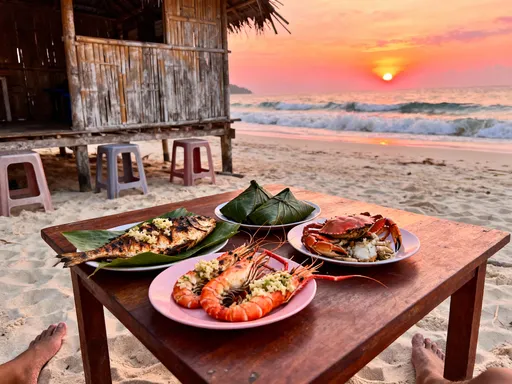
Some of the best places to eat are not on postcard-perfect beaches but tucked along the working waterfront. Small restaurants built on stilts over the water offer front-row seats to the fishing action. You can point to a fish in the tank, and within minutes, it’s cleaned, seasoned, and grilled over charcoal. The flesh comes out flaky and smoky, brushed with a glaze of garlic, soy, and lime. No menu is needed—just a gesture, a nod, and trust in the cook’s instinct.
One of the most iconic dishes is amok trey, a creamy coconut fish curry steamed in a banana leaf cup. The fish—often snakehead or catfish—is flaked and mixed with red curry paste, coconut milk, and kroeung, a traditional Khmer spice blend of lemongrass, galangal, turmeric, and garlic. The mixture is poured into a banana leaf container and steamed until it sets into a custard-like texture. Served with rice, it’s rich without being heavy, fragrant without overwhelming. It’s a dish that speaks of patience and precision, a contrast to the fast-paced street food but equally essential to the city’s palate.
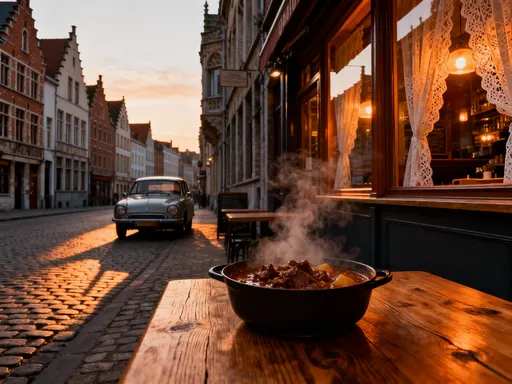
Other standout dishes include sour fish soup, made with tamarind, pineapple, and herbs, and lemongrass crab, where whole crabs are cracked and stir-fried with bruised lemongrass and chili. These are not delicate presentations—they’re hearty, bold, and meant to be eaten with fingers. The best spots are often unmarked, found by following the scent of grilled seafood or the sound of laughter from a group of locals sharing a meal. While some tourist-oriented restaurants offer similar dishes with higher prices and polished service, the real magic happens where the decor is minimal, the napkins are paper towels, and the focus is entirely on flavor.
The Night Market Pulse: Where Flavors Light Up the Dark
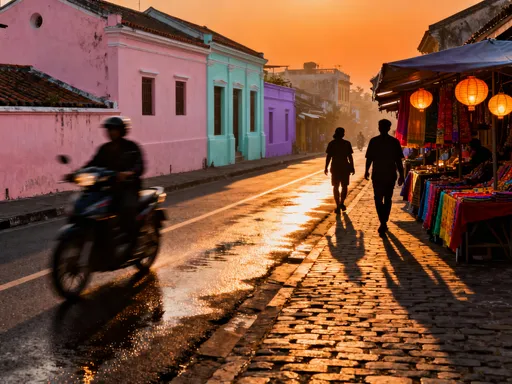
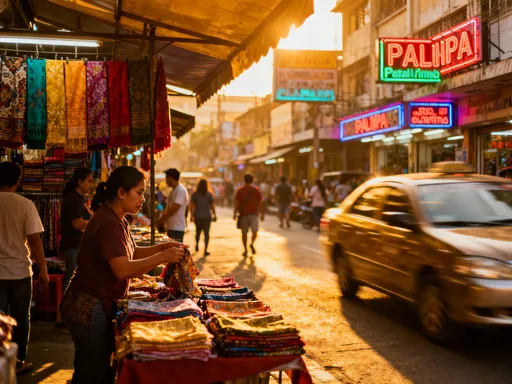
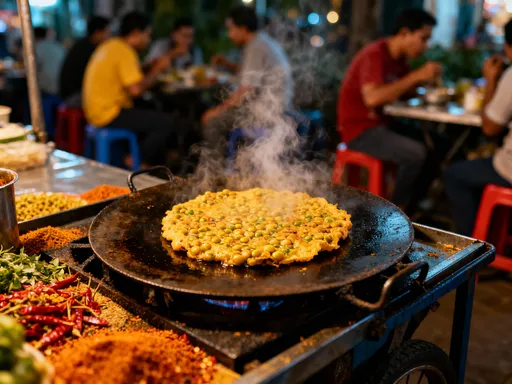
As the sun sets, Sihanoukville transforms. The heat softens, and the city exhales. Neon signs flicker to life—pink, green, blue—casting a dreamlike glow over the streets. Motorbikes slow, families emerge, and the sidewalks fill with the energy of evening. This is when the night market comes alive, not as a single destination but as a series of spontaneous gatherings. Carts roll out from hidden alleys. Grills are lit. Ice chests are opened. The air fills with the sizzle of skewers, the crunch of frying dough, and the sweet perfume of ripe mango.
Walking through the night market is a full-body experience. Your eyes catch the glow of grilled squid, their tentacles curling over flames. Your ears tune into the rhythmic thump of a cleaver chopping pork for satay. Your nose leads you to a stall pressing fresh sugarcane juice, the green stalks fed into a hand-cranked mill that drips sweet, pale liquid into cups filled with ice. Vendors call out specials in Khmer and broken English—"grilled scallops! mango with chili salt!"—but the real invitation is in the aroma.
Must-try items abound. Grilled squid on a stick, brushed with a sticky fish sauce glaze, is smoky and tender. Mango with chili salt—a ripe, golden slice dusted with a mix of salt, sugar, and ground chili—is sweet, spicy, and refreshing all at once. Iced coconut shakes, made by blending young coconut meat with ice and a touch of condensed milk, are the perfect antidote to the tropical heat. And for something warm, there are sticky rice balls filled with mung bean paste, rolled in shredded coconut, and served steaming from a bamboo basket.
But the night market is more than food. It’s urban theater. It’s where teenagers gather after work, where parents bring children for a treat, where friendships are strengthened over shared skewers. Plastic tables and stools fill the pavement, creating impromptu dining rooms under the stars. Music drifts from nearby shops—Khmer pop, Thai ballads, the occasional Western hit. There’s no admission, no schedule, no rules. You come, you eat, you stay as long as you like. And in that freedom, there’s a kind of joy that can’t be packaged or sold—it can only be lived.
Beyond the Coast: Finding Authentic Eateries Off the Tourist Path
The most memorable meals in Sihanoukville aren’t found in guidebooks. They’re discovered by wandering past the main roads, turning down quiet lanes, and following the scent of something delicious. In residential neighborhoods, where houses sit behind flowering hedges and children play in the street, small family kitchens operate out of front rooms or courtyards. These aren’t restaurants in the Western sense—there’s no signage, no menu board, no online presence. But if you look closely, you’ll see the clues: a cluster of plastic stools, a pot simmering on a portable stove, a grandmother stirring a pot with quiet focus.
These hidden spots serve some of the most authentic food in the city. A simple house might offer kuy teav, a pork and rice noodle soup fragrant with garlic and star anise, served with a side of lime and crushed pork rinds. Another might specialize in bai sach chrouk, grilled pork served over broken rice with a thin pork broth and pickled vegetables. The preparation is unhurried, the portions generous, the prices humble. You pay in cash, often in small bills, and receive a nod or a soft "thank you" in return.
Exploring these places requires respect and curiosity. A smile goes a long way. Learning a few basic Khmer phrases—"Soksaby te?" (How are you?), "Leng" (delicious), "Somphor" (please)—shows effort and earns warmth. Pointing at what others are eating is often the easiest way to order. And waiting patiently, without expectation of fast service, is part of the experience. These kitchens aren’t designed for efficiency; they’re designed for care.
It’s also important to recognize the difference between authentic local spots and places that mimic them for tourists. Some so-called "hidden gems" are carefully staged, with higher prices and simplified flavors to appeal to foreign palates. True authenticity isn’t about being hard to find—it’s about being real. It’s the stall where the owner remembers your face. It’s the meal served on a chipped plate. It’s the conversation you don’t fully understand but feel through gesture and tone. When you find it, you’ll know—not because it’s advertised, but because it feels like home.
Why This City Feeds the Traveler’s Soul
Sihanoukville doesn’t offer the polished perfection some travelers seek. It doesn’t promise comfort or convenience. But it offers something rarer: truth. In its streets, food is not a performance. It’s survival, celebration, memory, and love—all served on a paper plate. Every bite carries the weight of history—the French colonial influence in the baguettes sold beside rice porridge, the Vietnamese touch in the herb-heavy soups, the Chinese legacy in the stir-fries and noodle dishes, all woven into the deep roots of Khmer cuisine.
This city reminds us that travel is not just about seeing new places, but about feeling them. It’s about the warmth of a shared table, the kindness of a vendor who gives you an extra spoonful, the quiet pride of a cook who has spent decades perfecting one dish. It’s about understanding that beauty exists not despite imperfection, but because of it. The cracked walls, the tangled wires, the noise and chaos—they are not flaws. They are the marks of a life fully lived.
And in that life, food is the thread that connects everything. It brings people together. It sustains families. It honors tradition while adapting to change. To eat in Sihanoukville is to participate in that continuity, to become, however briefly, part of the rhythm. You don’t need a five-star restaurant to have a five-star experience. Sometimes, all you need is a plastic stool, a steaming bowl of noodles, and an open heart.
So when you visit, don’t just go for the beaches. Don’t just chase the sunset. Go for the flavors that rise with the morning sun, for the grills that light up the night, for the hands that cook with generations of knowledge. Explore with curiosity. Eat with gratitude. And remember: the best views aren’t always seen. Sometimes, they’re tasted.