You Won’t Believe What I Found in Bruges — This City Feels Like a Fairytale Come to Life
Stepping into Bruges feels like walking onto a movie set—except it’s real, and yes, it’s that beautiful. I checked in expecting charm, but the city’s unique architecture blew me away. Every cobblestone street, medieval square, and gabled rooftop tells a story. From the towering belfry to hidden courtyards tucked behind ancient walls, Bruges isn’t just picturesque—it’s alive with history. If you’re chasing authenticity and wonder, this is where you need to be. Let me show you why.
First Impressions: Arrival and the Instant Magic of Bruges
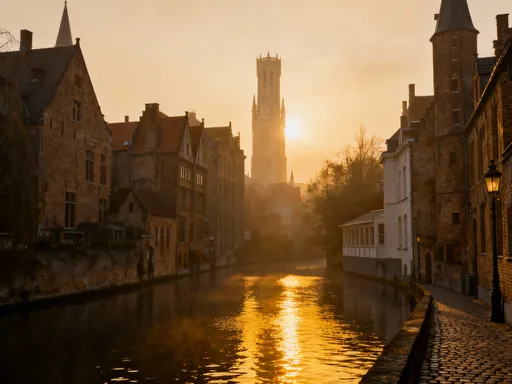
From the moment you step off the train at Bruges Station, a subtle transformation begins. The modern world recedes quickly as you walk the short distance toward the historic center. What strikes visitors first is not a grand monument or a sweeping vista, but a shift in atmosphere—air that feels quieter, streets that seem to breathe history, and a skyline punctuated by the unmistakable silhouette of the Belfry. This 83-meter tower, crowned with a gilded dragon, stands as both a literal and symbolic beacon, drawing travelers into a city that has preserved its medieval soul with remarkable fidelity.
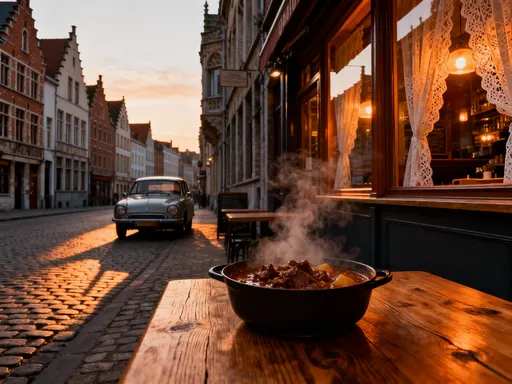
The visual impact of Bruges unfolds gradually yet powerfully. As you approach the Markt, the main market square, horse-drawn carriages clatter over cobblestones, adding a rhythmic authenticity to the scene. The canals, lined with centuries-old buildings leaning gently toward the water, reflect the soft hues of dawn or the golden glow of late afternoon. It’s not uncommon for first-time visitors to pause mid-step, momentarily unsure if what they’re seeing is real or something conjured from a dream. But it is real—and more intact than in nearly any other European city of its size.
Bruges owes much of its timelessness to strict preservation laws. Designated a UNESCO World Heritage Site in 2000, the city center is protected under rigorous guidelines that regulate everything from façade restoration to signage placement. New construction is highly restricted, and renovations must adhere to historical accuracy. These policies ensure that modern intrusions—glass towers, neon signs, or chain-store facades—remain absent from the core. As a result, the architectural integrity of Bruges remains unbroken, allowing visitors to experience a continuity of design that spans over 800 years.
This commitment to preservation is not merely bureaucratic; it reflects a deep cultural pride. Locals speak of their city with reverence, often referring to it as a living heirloom. Even small repairs—like replacing a single weathered brick—are approached with care and consultation. The outcome is a city that feels not like a museum exhibit behind glass, but a fully functioning urban space where daily life unfolds within walls that have stood since the Middle Ages. For the traveler, this means immersion is immediate and profound.
The Heart of the City: Market Squares and Architectural Harmony
At the center of Bruges’ architectural narrative are two adjacent squares: the Markt and the Burg. Together, they form the historic and aesthetic heart of the city, each offering a distinct yet complementary expression of Bruges’ layered past. The Markt, with its bustling energy and panoramic views, is where most visitors begin their journey. Ringed by colorful guildhouses with ornate gables and stepped rooftops, the square radiates a sense of theatrical grandeur. At its center, the Belfry rises like a stone sentinel, its carillon ringing every 15 minutes, a sonic thread weaving through the day.
Just a two-minute walk away, the Burg Square offers a quieter, more solemn contrast. Here, the architecture leans into ecclesiastical and civic power. The Gothic façade of the City Hall dominates one side, its intricate stonework depicting biblical figures and regional saints. Every arch, pinnacle, and tracery window speaks to the craftsmanship of the 14th century, when Bruges was one of Europe’s wealthiest trading cities. Opposite stands the Basilica of the Holy Blood, home to a revered relic believed to contain drops of Christ’s blood. The lower chapel, built in Romanesque style, dates back to the 12th century, while the upper chapel, in flamboyant Gothic, was added later—creating a vertical timeline of architectural evolution.
What makes Bruges extraordinary is how effortlessly it blends architectural styles within a compact area. Within a five-minute walk, you can move from the late-Gothic splendor of the City Hall to the Baroque elegance of the former Court of Justice, now the Provincial Court, and then to Renaissance-inspired façades on nearby streets. This stylistic harmony is not accidental. During its golden age in the 13th and 14th centuries, Bruges attracted artisans, merchants, and architects from across Europe. Each wave of influence left its mark, yet the city maintained a cohesive aesthetic through consistent use of local materials—mainly brick and sandstone—and adherence to proportion and scale.
Public spaces in Bruges are deliberately designed to highlight architectural beauty. Unlike modern cities where buildings face inward or are obscured by signage, here structures open outward, inviting close inspection. Squares are uncluttered, with minimal street furniture, allowing the buildings to take center stage. Even the placement of benches and lampposts follows historical precedent, ensuring that the visual rhythm of the façades remains uninterrupted. For the observant traveler, this creates an experience akin to walking through an open-air gallery where every turn reveals a new masterpiece.
Canals and Hidden Corners: A Different Perspective
To truly appreciate Bruges, one must see it from the water. A 30-minute boat tour along the city’s network of medieval canals offers a unique vantage point, revealing architectural details often missed from street level. As the boat glides beneath low stone bridges, passengers look up at waterside façades that rise directly from the canal, their foundations darkened by centuries of moisture. The reflections in the still water double the visual impact, creating a dreamlike symmetry that reinforces the city’s fairytale reputation.
These canals, originally built for trade and defense, now serve as scenic arteries that connect quiet corners of the city. The nickname “Venice of the North” is more than poetic—it reflects a genuine similarity in urban form, though Bruges’ waterways are narrower and more intimate. Unlike Venice, where crowds can overwhelm the experience, Bruges’ canals retain a sense of serenity, especially in the early morning or late evening. Along their banks, you’ll find houses with overhanging eaves, wooden shutters, and flower boxes spilling with geraniums, each contributing to a layered, storybook effect.
For those who prefer to explore on foot, Bruges offers a labyrinth of lesser-known alleys that feel like secrets whispered by the city itself. Streets like Vlamingstraat and Wollestraat, once centers of the medieval wool trade, now host boutique shops and artisan studios. Here, the architecture feels more personal—buildings slightly crooked, bricks uneven, doors painted in deep blues and forest greens. These details speak to centuries of use and adaptation, where function and beauty coexist. Walking these lanes, one gets the sense of discovering something untouched, a contrast to the more photographed spots nearby.
The charm of these hidden corners lies in their authenticity. There are no souvenir stalls or loud cafes here—just quiet courtyards, ivy-covered walls, and the occasional glimpse of a resident tending to a window box. It’s in these moments that Bruges reveals its true character: not as a curated destination, but as a lived-in city where history is not preserved behind ropes, but integrated into everyday life. For the traveler seeking depth over spectacle, these quiet streets offer a more intimate dialogue with the past.
Staying Local: Choosing Accommodations That Enhance the Experience
Where you stay in Bruges can profoundly shape your experience of the city. While larger hotels exist on the outskirts, the most rewarding options are boutique accommodations nestled within the historic center. Many of these are housed in restored 15th- or 16th-century buildings—former merchant homes, convents, or guildhalls—where original features have been carefully preserved. Waking up in a room with exposed brick walls, timber beams, or a view of a quiet canal is not just a luxury; it’s a continuation of the journey into Bruges’ architectural soul.
When selecting lodging, certain features can enhance immersion. Original timber framing, for instance, is not only visually striking but also tells a story of medieval construction techniques. Exposed brickwork, often in warm reds and ochres, adds texture and depth to interiors, while leaded glass windows filter light in a way that feels distinctly historical. Perhaps most coveted are rooms with canal views—waking to the soft lapping of water and the occasional passing boat creates a serene, almost meditative start to the day.
The best areas to stay depend on your travel style. For first-time visitors, proximity to the Markt offers convenience and energy; you’ll be steps from major attractions, cafés, and the Belfry. The Dampoort district, slightly to the east, provides a balance between accessibility and tranquility, with fewer crowds and more local flavor. For those seeking quiet, residential neighborhoods like Sint-Anna or Assebroek offer a glimpse into everyday Bruges life, with tree-lined streets and charming house fronts, all within a 20-minute walk of the center.
Booking in advance is essential, especially during spring and fall, when Bruges sees peak visitation. Many historic guesthouses have only a handful of rooms, and their popularity means they fill quickly. Look for properties with high guest ratings for cleanliness, hospitality, and authenticity. Some even offer homemade breakfasts featuring local cheeses, fresh bread, and Belgian jams—small touches that deepen the sense of connection to the region. By choosing accommodations that honor the city’s heritage, travelers do more than sleep in a beautiful place; they become temporary stewards of its legacy.
Beyond the Postcard: Seasonal Shifts and Light’s Role in Aesthetic Appeal
Bruges transforms with the seasons, and each time of year offers a distinct architectural narrative. In summer, the city basks in long daylight hours, with golden light washing over brick façades and casting sharp shadows across cobblestones. This is the Bruges of postcards—vibrant, lively, and radiant. But for those seeking a more introspective experience, the shoulder seasons—spring and autumn—offer softer palettes and fewer crowds. Misty mornings in April or October lend a painterly quality to the canals, while fallen leaves漂 on the water add a touch of melancholy beauty.
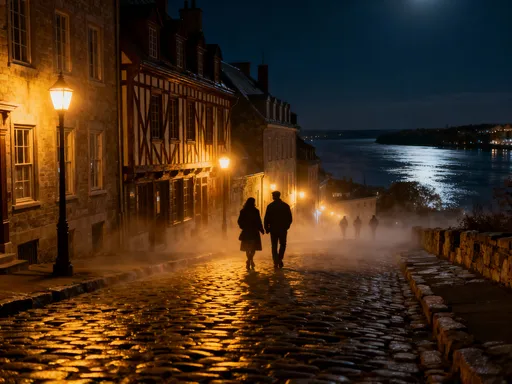
Winter, often overlooked, may be the most atmospheric time to visit. On foggy days, the Belfry emerges like a ghostly tower from the mist, and the city’s contours blur into a monochrome dreamscape. Streetlamps glow like candles, and the warmth of café windows beckon from the damp air. Fewer tourists mean you can linger in squares without distraction, studying the texture of stonework or the curve of a gable without feeling rushed. The Christmas market, held in the Markt, adds a festive layer without overwhelming the historic fabric—wooden huts blend with the surroundings, and the scent of mulled wine drifts through the cold air.
Light plays a crucial role in how we perceive Bruges’ architecture. The low angle of the sun in winter highlights the depth of carvings and the layering of gables, while summer’s overhead light flattens surfaces. Photographers often prefer early morning or late afternoon, when the ‘golden hour’ bathes buildings in warm tones and creates long reflections on the canals. Even on overcast days, the diffused light can enhance the moodiness of the city, making brickwork appear richer and water more reflective.
Visiting off-season also allows for a deeper appreciation of architectural details. Without crowds, you can stand close to a façade and trace the hand-chiseled patterns in the stone, or notice how centuries of weathering have created a natural patina. You might observe how ivy climbs a wall in a specific pattern, or how moss gathers in the crevices of a bridge. These quiet observations, often missed in peak season, contribute to a more personal and lasting connection with the city. Bruges, in these moments, feels less like a destination and more like a companion on your journey.
Walking the Timeline: A Self-Guided Architectural Tour Route
One of the best ways to experience Bruges is on foot, following a thoughtfully planned route that connects major landmarks with hidden gems. A full-day walking tour, covering approximately 4.5 kilometers, allows you to trace the city’s architectural evolution while maintaining a comfortable pace. Begin at the Belfry, where you can climb the 366 steps for a panoramic view of the red-tiled rooftops stretching to the horizon. From there, walk south to the Markt, absorbing the energy of the square before continuing to the Burg.
After exploring the City Hall and Basilica of the Holy Blood, head east toward the Groeninge Museum, housed in a neoclassical building that contrasts with the surrounding medieval structures. Though the museum’s interior showcases Flemish art, its façade deserves attention—a study in symmetry and restraint. From here, make your way to the Church of Our Lady, home to Michelangelo’s Madonna and Child sculpture. The church’s tall brick tower is a defining feature of the skyline, and its interior, with soaring arches and minimalist elegance, offers a moment of quiet reflection.
Next, enter the Begijnhof, a UNESCO-protected site and one of Bruges’ most peaceful enclaves. Founded in the 13th century as a religious community for women, it remains a place of serenity, with whitewashed houses arranged around a central garden. The contrast between the austere beauty of the beguinage and the ornate guildhouses of the Markt underscores the diversity of Bruges’ architectural language. Take time to sit on a bench, listen to the birds, and feel the stillness.
Continue west toward the canals, where you can pause for coffee or waffles at a café in a centuries-old building. Look for spots with outdoor seating by the water—few experiences rival sipping hot chocolate while watching a swan glide past. The final leg of the tour loops back toward the center, passing quiet residential streets where laundry hangs between houses and cats nap on windowsills. Wear comfortable shoes with good support, as the cobblestones can be uneven. Allow six to seven hours, including breaks, to fully absorb the journey.
Why Bruges Stays With You: The Emotional Impact of Timeless Design
Bruges does not merely impress—it lingers. Long after you’ve returned home, images of its skyline at dusk, the sound of distant chimes, or the texture of ancient brick remain vivid in memory. This emotional resonance stems from the city’s ability to make history feel immediate. Unlike places where the past is reconstructed or dramatized, Bruges presents authenticity in its purest form. Its architecture doesn’t shout for attention; it whispers, inviting you to lean in, look closer, and listen.
What makes this experience so powerful is the sense of continuity. In Bruges, the past is not separate from the present. People live, work, and shop in buildings that have stood for centuries. A bakery operates in a house from 1420; a florist arranges blooms beneath a gabled roof that has weathered storms for generations. This seamless integration fosters a deep appreciation for craftsmanship and urban preservation. It reminds us that beauty built with care and intention can endure far beyond its creators’ lifetimes.
For many visitors, especially women between 30 and 55 who value meaningful travel and cultural connection, Bruges offers more than sightseeing—it offers perspective. In a world of rapid change and disposable design, the city stands as a testament to patience, artistry, and resilience. Walking its streets, one feels a quiet pride in human achievement and a renewed belief in the value of preserving what matters. It’s not just about aesthetics; it’s about legacy.
Bruges inspires a kind of reverence that is rare in modern travel. It doesn’t dazzle with spectacle but earns admiration through consistency and integrity. To visit is to participate in a centuries-old story, not as a spectator, but as a witness. And in that witnessing, we find a deeper connection—to history, to beauty, and to the quiet power of places that refuse to be forgotten.
Bruges isn’t just a place you visit—it’s a place you feel. Its architecture doesn’t shout; it whispers stories of centuries through stone, brick, and beam. By choosing to slow down and look closely, travelers gain more than photos—they gain perspective. In a world of fleeting trends, Bruges stands firm, reminding us that beauty built to last never goes out of style.