You Won’t Believe What Manila’s Urban Jungle Hides for Shoppers
Manila isn’t just chaos and traffic—it’s a living, breathing urban maze where shopping becomes an adventure. I never expected to find such vibrant street markets, sleek malls, and hidden boutiques all packed into one city. From bustling sidewalks to skybridges linking mega-malls, Manila’s urban layout shapes how we shop, explore, and connect. This is retail therapy redefined—raw, real, and totally unforgettable. The city pulses with commercial energy, where every corner tells a story of resilience, creativity, and connection. Whether you’re navigating air-conditioned shopping fortresses or bartering in sun-drenched market alleys, Manila offers a layered experience that transcends mere consumerism. It’s a place where commerce meets culture, where movement defines discovery, and where the rhythm of daily life beats strongest in its retail spaces.
The Pulse of the City: Where Urban Design Meets Shopping Culture
Manila’s urban landscape is not designed for convenience—it evolves through necessity. Its dense, layered cityscape, shaped by decades of organic growth and limited large-scale planning, creates a unique rhythm for shopping. Narrow alleys, winding side streets, and towering high-rise complexes coexist in a dynamic tension that defines how residents access goods and services. In business districts like Makati and Ortigas, pedestrian flow is both a challenge and an opportunity. Sidewalks widen near office buildings during lunch hours, transforming into impromptu market lanes where food vendors, accessory sellers, and book peddlers set up shop. These micro-markets emerge naturally, responding to foot traffic patterns and consumer demand in real time.
The interplay between infrastructure and shopping behavior is evident throughout the city. In areas with well-connected walkways and protected pathways, such as Ayala Avenue in Makati, foot traffic remains steady even during midday heat. Conversely, neighborhoods without safe or shaded crossings see reduced pedestrian activity, pushing commerce toward vehicle-accessible zones. This uneven development underscores how urban planning—or the lack thereof—directly influences retail accessibility. For many residents, especially those without private transportation, the ability to walk safely to a market or mall can determine their daily purchasing power and quality of life.
Moreover, Manila’s layered retail ecosystem reflects its social stratification. Upscale boutiques cluster around secured compounds and private developments, while informal vendors thrive along major thoroughfares and near public transit points. Despite these divides, there is constant interaction between different economic tiers. Office workers descend from glass-walled towers to buy snacks from sidewalk stalls; families visiting air-conditioned malls later cross busy intersections to return home in jeepneys. This fluid movement illustrates how shopping in Manila is not just about consumption—it’s a daily negotiation between comfort, cost, and convenience, all shaped by the city’s physical form.
Malls as Micro-Cities: Inside Manila’s Shopping Fortresses
In Manila, shopping malls are more than retail spaces—they are self-contained worlds. Mega-malls like SM Mall of Asia in Pasay, Greenbelt in Makati, and TriNoma in Quezon City function as micro-cities, integrating shopping, dining, entertainment, work, and even transportation into single, climate-controlled environments. These complexes often span multiple buildings connected by skybridges, underground tunnels, or elevated walkways, creating vast indoor networks that allow visitors to spend entire days without stepping outside. With hundreds of stores, dozens of restaurants, cinemas, churches, medical clinics, and co-working spaces, these malls have become essential hubs of urban life.
The dominance of malls in Manila’s retail culture is no accident. The city’s tropical climate, characterized by intense heat and frequent heavy rains, makes air-conditioned interiors highly desirable. During the summer months, when temperatures regularly exceed 35°C (95°F), malls offer a refuge from the sweltering sun. During the rainy season, when sudden downpours can flood streets and paralyze traffic, they provide dry, safe passage between destinations. This practical advantage has elevated malls beyond mere shopping centers—they are now social sanctuaries, places where families gather, teenagers hang out, and professionals meet for business lunches.
SM Mall of Asia, one of the largest malls in the world by gross floor area, exemplifies this phenomenon. It houses over 900 retail outlets, a full-service department store, an Olympic-sized ice skating rink, a concert arena, and a bayfront promenade with views of Manila Bay. The mall is directly linked to the MRT-3 Taft Avenue station, making it a key node in the city’s public transportation network. Similarly, Greenbelt in Makati integrates green spaces and open-air walkways into its design, blending nature with luxury retail. Its proximity to corporate offices and embassies makes it a preferred destination for business meetings and high-end shopping.
These malls also serve as cultural anchors. They host art exhibitions, seasonal festivals, and community events that draw people from across the metro. Christmas decorations go up as early as September, transforming interiors into elaborate winter wonderlands complete with fake snow and light shows. During these times, malls become gathering places for families, reinforcing their role as centers of shared experience. While critics argue that the rise of mega-malls has contributed to urban homogenization, their popularity underscores a deeper truth: in a city where public space is limited and weather conditions are extreme, these indoor cities fulfill a vital social and functional need.
Street Markets with Soul: The Grit Behind the Glamour
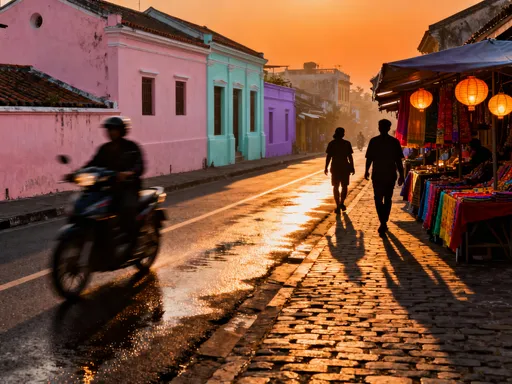
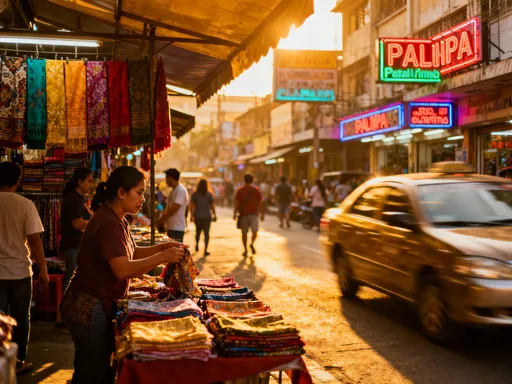
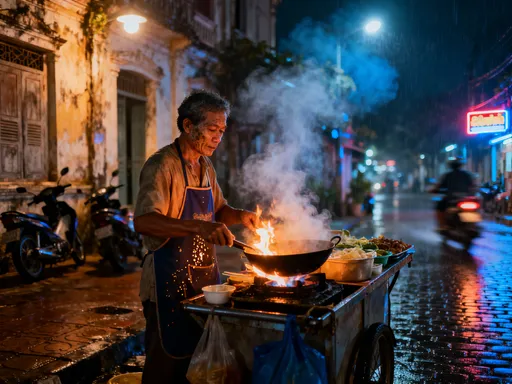
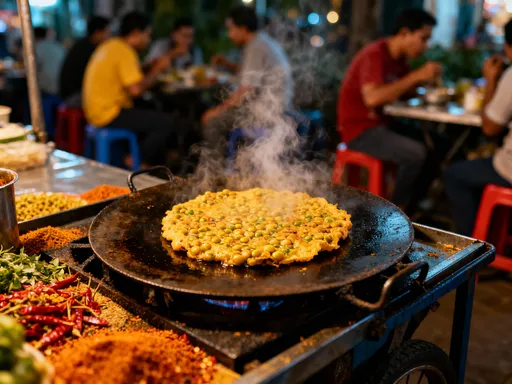
Beyond the polished corridors of air-conditioned malls lies another layer of Manila’s shopping identity—one defined by energy, noise, and raw authenticity. Street markets like Divisoria and Quiapo Market offer a sensory experience unlike any other. Here, the air hums with the sounds of haggling voices, sizzling street food, and blaring music from portable speakers. Stalls overflow with colorful fabrics, imitation electronics, kitchenware, toys, and religious icons. The smell of grilled meat, dried fish, and incense blends into a scent that lingers long after departure. This is commerce in its most unfiltered form, where survival instincts meet entrepreneurial spirit.
Divisoria, located in the heart of Manila, is a wholesale and retail hub known for its affordability and variety. Shoppers flock here to buy in bulk—everything from school supplies to party decorations to clothing by the dozen. Vendors operate in tight clusters, often specializing in a single product category, which allows customers to compare prices and quality across multiple stalls. Bargaining is expected, and prices can drop significantly with negotiation. While the environment can feel overwhelming, especially during peak hours, it remains a critical economic engine for thousands of small traders and their families.
Quiapo Market, centered around the historic Quiapo Church, adds a spiritual dimension to the shopping experience. Pilgrims come to venerate the Black Nazarene, while others browse stalls selling prayer cards, rosaries, candles, and traditional healing items. The market extends beyond religious goods, offering everything from second-hand books to vintage clothing to herbal remedies. Despite concerns about congestion and petty theft, Quiapo remains a vibrant symbol of grassroots commerce. It thrives on personal relationships—between vendor and customer, neighbor and neighbor—and operates on trust as much as transaction.
These markets face real challenges. Narrow passageways, lack of sanitation infrastructure, and inconsistent safety measures make navigation difficult, especially for elderly or disabled visitors. Traffic congestion in surrounding areas often spills into pedestrian zones, creating hazardous conditions. Yet, efforts to modernize these spaces must be handled with care. Over-regulation or displacement risks erasing the very character that makes them authentic. Instead, incremental improvements—such as better lighting, waste management, and vendor training—can enhance safety and hygiene without sacrificing the markets’ organic spirit. After all, their value lies not just in what they sell, but in how they reflect the resilience and resourcefulness of ordinary Filipinos.
Hidden Gems in Plain Sight: Boutiques and Design Hubs in Urban Nooks
Amid Manila’s urban sprawl, tucked away in quiet corners and repurposed structures, a new wave of independent retail is quietly thriving. These are not the glossy storefronts of major malls, but intimate boutiques, craft collectives, and design studios that celebrate local talent and sustainable practices. Areas like Poblacion in Makati and La Fuerza Compound in Salcedo Village have become hotspots for this creative resurgence. Once overlooked or underutilized, these neighborhoods now pulse with artistic energy, drawing curious shoppers seeking something unique and meaningful.
In Poblacion, old houses are being transformed into curated concept stores that blend fashion, art, and lifestyle products. One might find a vintage clothing shop housed in a century-old Filipino home, its wooden floors creaking underfoot, shelves lined with hand-dyed textiles and upcycled accessories. Nearby, a small café doubles as a gallery space, showcasing works by emerging artists. These spaces prioritize experience over efficiency—visitors are encouraged to linger, touch, and engage. Labels emphasize ethical sourcing, slow fashion, and support for local artisans, appealing to a growing segment of conscious consumers.
La Fuerza Compound, a cluster of low-rise buildings originally built for light industry, has evolved into a creative enclave. Designers, architects, and makers occupy converted warehouses, turning industrial spaces into studios and retail outlets. Visitors can browse handcrafted ceramics, minimalist jewelry, and bespoke furniture—all made in the Philippines. Pop-up markets and weekend bazaars frequently take place here, drawing crowds eager to discover one-of-a-kind pieces. Unlike the mass-produced items found in malls or street markets, these goods carry stories—of materials sourced from rural cooperatives, of techniques passed down through generations, of designs inspired by Filipino heritage.
This shift toward niche, locally rooted retail represents a quiet rebellion against homogenized consumer culture. By embracing adaptive reuse—transforming old buildings into vibrant commercial spaces—these hubs demonstrate how urban decay can be reimagined as creative opportunity. They also foster community, creating spaces where makers and buyers interact directly, building relationships beyond the transaction. For the discerning shopper, particularly those who value authenticity and sustainability, these hidden gems offer a refreshing alternative to mainstream retail. They prove that even in a city dominated by mega-malls and crowded markets, there is room for intimacy, craftsmanship, and soul.
Getting Around: Navigating Manila’s Retail Geography
One of the greatest challenges—and rewards—of shopping in Manila is simply getting there. The city’s fragmented geography, combined with chronic traffic congestion, requires strategic planning and flexibility. Shoppers must navigate a patchwork of transportation modes: walking, riding jeepneys, taking the MRT, using ride-hailing apps, or transferring between modes mid-journey. Each option comes with trade-offs in cost, comfort, and time. Understanding this complex web is essential for maximizing both efficiency and discovery.
Walking remains the most direct way to explore dense commercial areas, but it is not always practical. In Makati, the Ayala Center boasts an extensive network of covered walkways and skybridges that connect major malls, hotels, and offices. This pedestrian-friendly infrastructure allows visitors to move seamlessly between Greenbelt, Glorietta, and SM Makati without braving the heat or traffic. However, outside such planned districts, sidewalks are often narrow, uneven, or obstructed by vendors and parked vehicles. Crossing busy intersections can be daunting, especially for first-time visitors.
Jeepneys, the iconic Filipino public utility vehicles, offer an affordable and colorful way to travel short to medium distances. Routes often follow major avenues and connect key shopping zones, such as EDSA, Quezon Avenue, and Rizal Avenue. While inexpensive, jeepney rides can be crowded and slow, particularly during rush hours. The MRT-3, which runs along EDSA from North Avenue to Taft Avenue, provides faster travel between major hubs like Ortigas, Makati, and Pasay. Stations like Ayala and Shaw Boulevard link directly to shopping centers, reducing transfer time. However, capacity constraints and occasional maintenance issues can disrupt service.
Ride-hailing apps like Grab have become increasingly popular, offering air-conditioned comfort and door-to-door convenience. They are especially useful for families, elderly shoppers, or those carrying heavy purchases. Still, fares can spike during peak hours, and traffic delays remain a reality. The most effective strategy is often a hybrid approach—using the MRT to bypass congested sections, then switching to a ride-hailing service or walking for the final leg. Travelers who embrace this multimodal mindset often uncover unexpected discoveries: a small bakery near a transit stop, a quiet park beside a busy avenue, or a hidden boutique down a side street. In Manila, the journey is as much a part of the shopping experience as the destination.
Shopping as Urban Survival: How Retail Adapts to the City’s Chaos
In a city where traffic jams can stretch for hours and sudden rains flood entire neighborhoods, retail doesn’t just adapt—it innovates. Vendors, malls, and delivery services have developed creative solutions to overcome Manila’s logistical challenges. Pop-up stalls appear overnight in high-footfall areas, capitalizing on temporary opportunities. Food carts cluster near office buildings during lunch breaks, then vanish by afternoon. Mobile vendors patrol residential areas with loudspeakers, selling everything from ice candy to spare parts. This agility reflects a deep understanding of the city’s rhythms and a commitment to meeting demand where it exists.
Malls, too, have evolved into logistical powerhouses. Many now host centralized delivery hubs for e-commerce companies, enabling same-day or next-day fulfillment across Metro Manila. Some have introduced in-mall parcel lockers, allowing customers to pick up online orders without leaving the climate-controlled environment. Others partner with food delivery platforms to serve mall-based restaurants to nearby homes and offices, expanding their reach beyond physical visitors. These integrations blur the line between physical and digital retail, creating a seamless experience for time-pressed consumers.
Meanwhile, informal vendors demonstrate remarkable resilience. In areas prone to flooding, some use elevated platforms or waterproof containers to protect goods. Others form cooperatives to share resources, such as portable canopies or shared storage spaces. Technology has also empowered small sellers—many now accept digital payments through GCash or PayMaya, reducing reliance on cash and increasing transaction security. Social media allows them to announce locations, promote deals, and build customer loyalty beyond their immediate vicinity.
This culture of adaptation is not born of convenience, but necessity. In a city of over 13 million people, with limited infrastructure and unpredictable conditions, survival depends on flexibility. Retailers who thrive are those who anticipate change, respond quickly, and remain deeply connected to their communities. Their ingenuity ensures that commerce continues to flow, even when roads do not. For shoppers, this means a dynamic, ever-changing landscape—one where innovation happens not in boardrooms, but on sidewalks, in markets, and in the minds of those who make a living one sale at a time.
The Future of Urban Shopping: Balancing Growth and Authenticity
As Manila continues to grow, so too does its retail landscape. New mixed-use developments are rising across the metro, combining residential towers, office spaces, and shopping centers into vertical communities. Projects like Arca South in Taguig and McKinley Hill in Fort Bonifacio exemplify this trend, integrating green spaces, pedestrian pathways, and sustainable design into their master plans. These developments aim to create more livable, connected environments where shopping is just one part of a broader urban experience.
Digital integration is also reshaping how people shop. Contactless payments, mobile loyalty programs, and augmented reality try-on features are becoming more common, especially in upscale malls. E-commerce continues to expand, accelerated by the habits formed during recent years. Yet, rather than replacing physical retail, digital tools are increasingly used to enhance it. QR codes in stores link to product stories, social media drives foot traffic to pop-ups, and apps help shoppers navigate complex mall layouts. The future of shopping in Manila is not about choosing between online and offline, but about weaving them together into a cohesive experience.
Still, this evolution raises important questions. As the city modernizes, how can it preserve the grit, warmth, and authenticity that define its character? Will the charm of Divisoria survive gentrification? Can Quiapo maintain its spiritual and cultural essence amid urban renewal? The risk of losing Manila’s soul in the name of progress is real. But there is also hope—in the form of community-led initiatives, heritage conservation efforts, and growing appreciation for local craftsmanship.
The vision for Manila’s future retail should be one of inclusion and balance. It should honor innovation while protecting heritage, embrace efficiency without erasing humanity, and build modern infrastructure without displacing the people who give the city its heartbeat. Shopping, at its best, is not just about acquiring things—it’s about connection, discovery, and belonging. In Manila, where every purchase carries a story and every street holds a surprise, the true treasure is not what you buy, but what you experience along the way. The city’s urban jungle may be chaotic, but within it beats a rhythm of resilience, creativity, and endless possibility.